
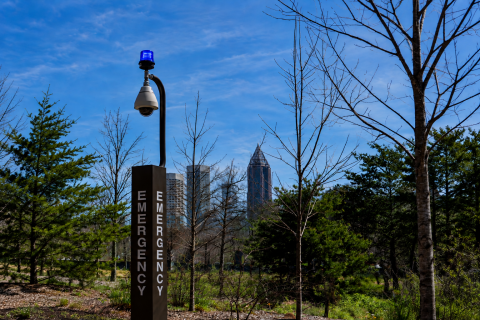
GTPD use of this technology is governed by departmental procedures, access controls, system auditing, and defined data-retention practices. Technology is used for legitimate law enforcement and public safety purposes and is not intended for general monitoring of individuals or constitutionally protected activities.
As part of our commitment to transparency and accountability, GTPD provides information about the use of this technology. Providing clear and accessible information supports the public trust that is essential to effective community policing and public safety.
How many Flock cameras does GTPD have?
GTPD currently has 12 fixed cameras.
What type of Flock cameras does GTPD use?
GTPD uses Automated License Plate Reader (ALPR) cameras.
What is GTPD’s protocol for using them, and what measures does GTPD take to ensure there is no misuse of data?
GTPD’s use of ALPR technology is limited to legitimate law enforcement and public safety purposes. Access to the system is restricted based on personnel roles and responsibilities. System activity is logged and subject to auditing, and data is retained for a limited period in accordance with GTPD’s established practices and applicable requirements.
What officers have access to these cameras?
Access to search is restricted to authorized personnel within the Investigations Division. The Deputy Chief and Technology Commander are also authorized to access the system for audit purposes.
How long does GTPD have access to a license plate once it is recorded?
License plate reader data is retained for seven days.
Do parties other than GTPD and Flock have access to the data? If so, who and how much is shared?
GTPD shares its Flock ALPR data only with authorized Georgia law enforcement agencies located within a 50-mile radius of Georgia Tech’s campus boundaries, and only for legitimate public safety and investigative purposes. Access is not automatically granted. All requests are reviewed by the GTPD Information Technology Commander to verify the requesting agency’s authorization and the legitimacy of the intended use before access is approved. Additional security measures have been implemented to validate the purpose of each access request and help prevent unauthorized or inappropriate use of the system. All access is subject to departmental policies, established access controls, and system auditing requirements.
How frequently is data shared between GTPD and outside parties?
Authorized Georgia law enforcement agencies may query GTPD’s available ALPR data for legitimate law enforcement purposes during the seven-day retention period, subject to GTPD’s access requirements.
Has there been tangible improvement related to crime prevention and response since implementation of Flock on campus?
Flock ALPR technology has provided GTPD with an additional investigative tool in several cases, including investigations involving robberies, thefts, and sex-related offenses. In these cases, vehicle information obtained through the system has assisted investigators in developing leads and advancing investigations.
Are there any plans to increase the number of Flock cameras on campus?
GTPD does not currently have plans to increase the number of Flock cameras on campus.
Has GTPD ever sold or given data to ICE?
No. GTPD has not sold or provided its Flock ALPR data to U.S. Immigration and Customs Enforcement (ICE). GTPD does not share its Flock ALPR data with any federal law enforcement agencies.
Why does GTPD use Flock cameras as opposed to other brands of ALPRs?
GTPD selected Flock Safety’s ALPR technology based on its investigative capabilities, ease of deployment, reliability, and ability to support existing public safety operations.
The technology provides timely vehicle information that can assist with investigations involving stolen vehicles, serious crimes, and missing or endangered persons. Its regional network also supports collaboration with authorized law enforcement partners, which can be particularly useful in a metropolitan area where vehicles may quickly cross jurisdictional boundaries.